Voters in Motion: What Black, Hispanic, and Young People are Telling Us
By Sara Stephenson and Nicole Brok
Black, Hispanic, and young voters were important constituencies in the 2024 presidential election. Heading into the 2026 midterms, TargetSmart conducted a nationwide survey to better understand how these registered voters are thinking about the congressional vote, political institutions, and the choices ahead.
The poll was made possible by TargetSmart’s recent VoterBase demographic enhancement, which expanded coverage among groups that have historically been harder to reach and model accurately. TargetSmart’s August update increased demographic coverage by 22.7% among Black voters, 19.4% among Hispanic and Latino voters, and 21.0% among young voters.
A Different Picture Heading Into 2026
Starting where these voters stood in 2024, Kamala Harris carried Black, Hispanic, and young voters by a commanding 25 points, 60% to 35% over Donald Trump.
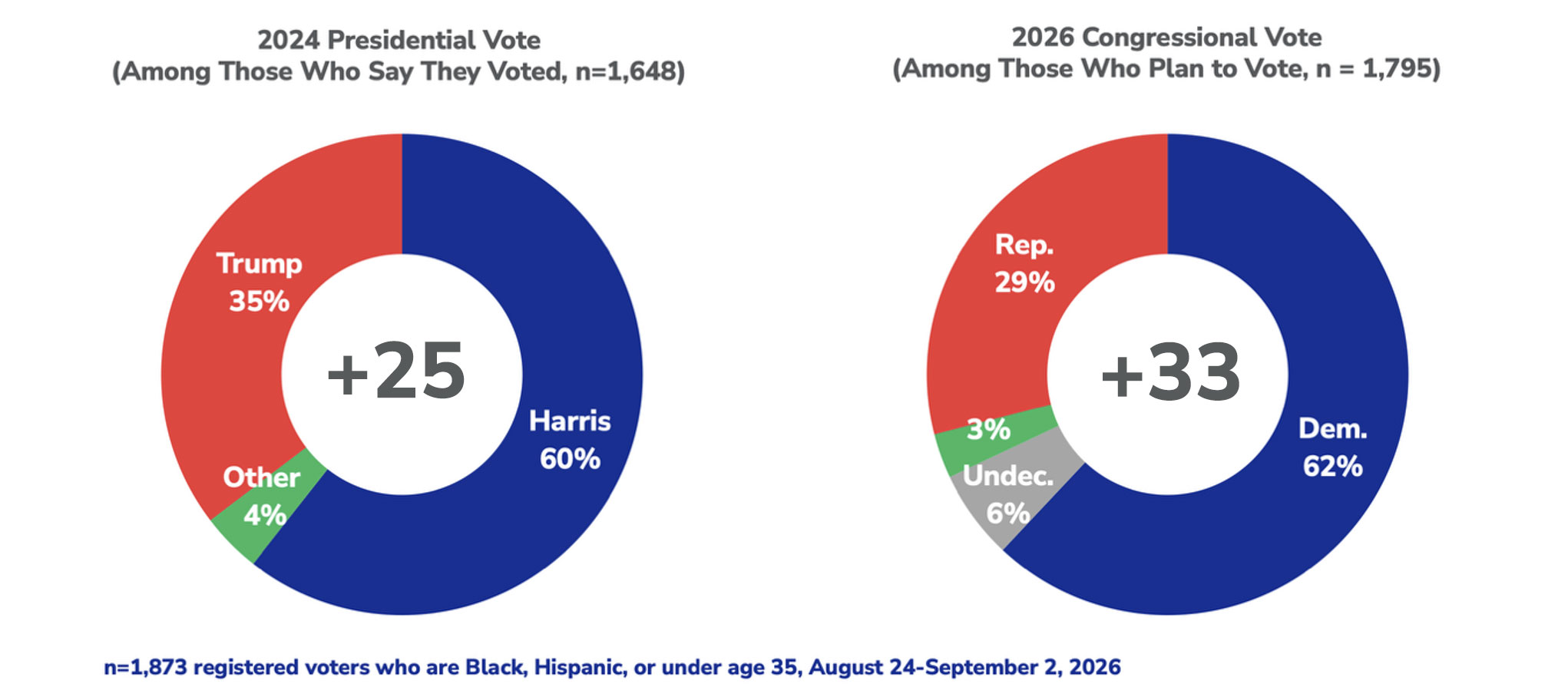
Among those who plan to vote this November, 62% currently back the Democratic candidate for Congress in their district, compared with 29% for the Republican candidate, with 6% undecided and 3% supporting another candidate. That is an 8-point jump in the margin, from a 25-point Harris lead in 2024 to a 33-point Democratic advantage now, a signal that support is softening for Republicans.
Young White Men Turn Away From Trump
Not all of this shift is coming from the same place. The largest movement by far is happening among young male voters, specifically White men under 35. This group backed Trump over Harris by 9 points in 2024, 51% to 42%, but now favors the Democratic congressional candidate by 11 points, 50% to 39%, a striking reversal in a single election cycle. Hispanic voters are moving in the same direction, just from a different starting point. Their 8-point Harris advantage in 2024, 52% to 44%, has widened into an 19-point Democratic lead on the generic congressional ballot, 55% to 36%.
Even Trump’s own 2024 coalition shows some cracks. Among voters who say they backed Trump in 2024, 82% still support a Republican congressional candidate today, but 12% now say they would back a Democrat, 2% support another candidate, and 4% are undecided. That is a modest but real defection from a base that was solidly behind him less than two years ago.
DSA Outpacing Congressional Democrats
The congressional ballot numbers do not mean these voters are uniformly satisfied with Democrats in Congress. Just 49% have a favorable opinion of congressional Democrats, while 41% view them unfavorably. The Democratic Socialists of America (DSA) receive a 56% favorable rating and a 32% unfavorable rating in the same survey, while Republicans in Congress and Donald Trump receive lower favorable ratings among the constituencies surveyed.
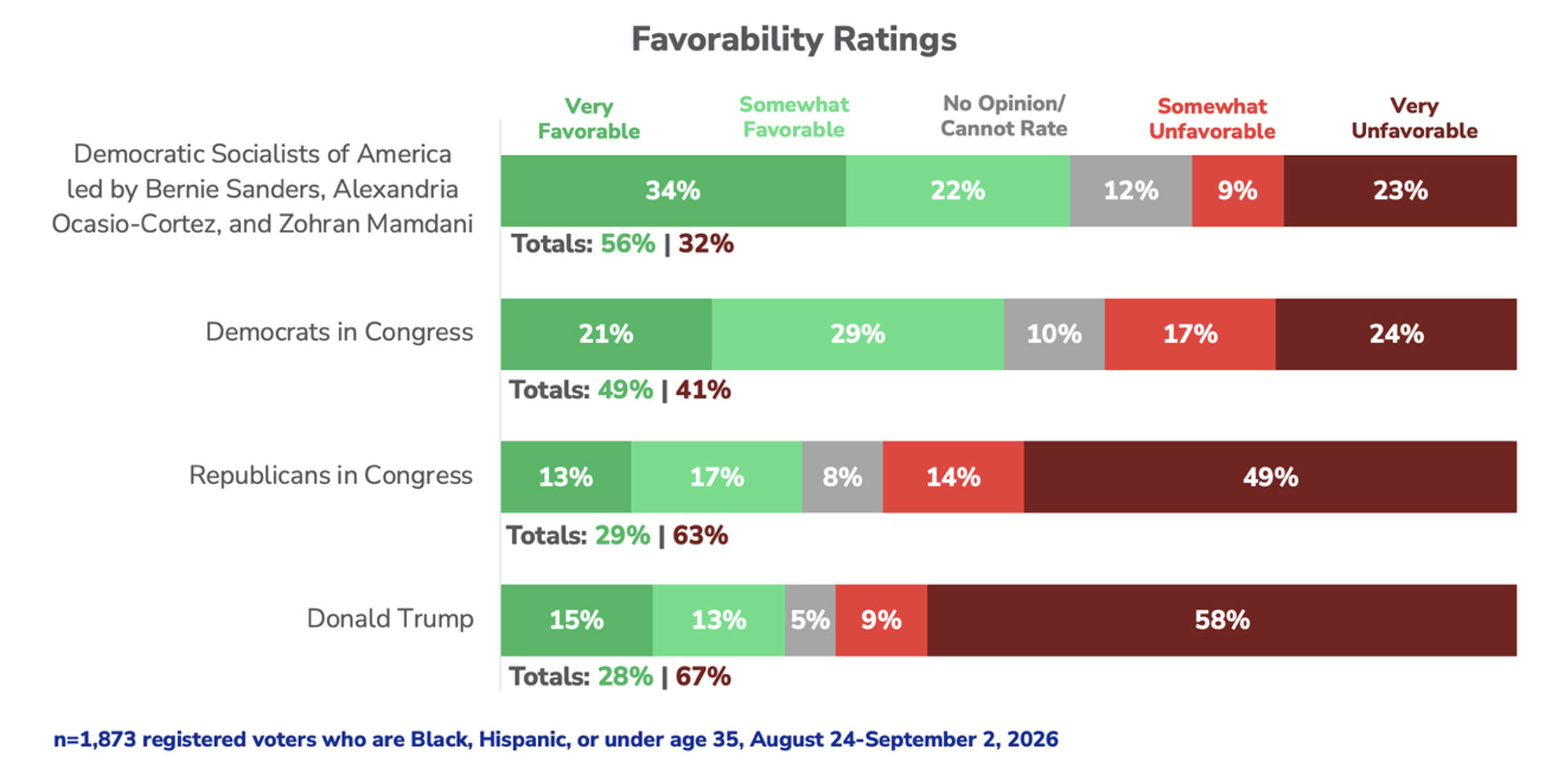
That gap between current congressional vote preference and broader favorability is an important distinction when interpreting the findings. A respondent can prefer one party’s congressional candidate while still holding reservations about that party’s elected officials or political institutions more broadly.
The survey paints a more complicated picture than a simple partisan swing. Democratic gains on the congressional ballot have not translated into confidence in the party itself, and that distinction matters for anyone trying to understand what these voters actually want in 2026. A voter can back a Democratic candidate for Congress while still holding real reservations about the party’s leadership, its record, or the political system as a whole. Right now, that appears to be exactly what is happening among Black, Hispanic, and young voters.
In part 2 of the analysis, we’ll dig into what is fueling that skepticism, from economic pressure and distrust of political institutions to concerns about emerging technology and the enthusiasm gap shaping turnout heading into November.
About the Poll
TargetSmart designed and administered a nationwide, multi-modal survey of 1,873 registered voters who are Black, Hispanic, or under age 35. The survey was conducted August 24 through September 2, 2026. Respondents were reached through live caller interviews, text-to-web surveys, and online panels matched to the TargetSmart enhanced voter file. The total sample has a credibility interval of +/- 2.3 percentage points. The margin of error for subgroups is larger and varies.
Voters in Motion: What Black, Hispanic, and Young People are Telling Us
By Sara Stephenson and Nicole Brok
Black, Hispanic, and young voters were important constituencies in the 2024 presidential election. Heading into the 2026 midterms, TargetSmart conducted a nationwide survey to better understand how these registered voters are thinking about the congressional vote, political institutions, and the choices ahead.
The poll was made possible by TargetSmart’s recent VoterBase demographic enhancement, which expanded coverage among groups that have historically been harder to reach and model accurately. TargetSmart’s August update increased demographic coverage by 22.7% among Black voters, 19.4% among Hispanic and Latino voters, and 21.0% among young voters.
A Different Picture Heading Into 2026
Starting where these voters stood in 2024, Kamala Harris carried Black, Hispanic, and young voters by a commanding 25 points, 60% to 35% over Donald Trump.
Among those who plan to vote this November, 62% currently back the Democratic candidate for Congress in their district, compared with 29% for the Republican candidate, with 6% undecided and 3% supporting another candidate. That is an 8-point jump in the margin, from a 25-point Harris lead in 2024 to a 33-point Democratic advantage now, a signal that support is softening for Republicans.
Young White Men Turn Away From Trump
Not all of this shift is coming from the same place. The largest movement by far is happening among young male voters, specifically White men under 35. This group backed Trump over Harris by 9 points in 2024, 51% to 42%, but now favors the Democratic congressional candidate by 11 points, 50% to 39%, a striking reversal in a single election cycle. Hispanic voters are moving in the same direction, just from a different starting point. Their 8-point Harris advantage in 2024, 52% to 44%, has widened into an 19-point Democratic lead on the generic congressional ballot, 55% to 36%.
Even Trump’s own 2024 coalition shows some cracks. Among voters who say they backed Trump in 2024, 82% still support a Republican congressional candidate today, but 12% now say they would back a Democrat, 2% support another candidate, and 4% are undecided. That is a modest but real defection from a base that was solidly behind him less than two years ago.
DSA Outpacing Congressional Democrats
The congressional ballot numbers do not mean these voters are uniformly satisfied with Democrats in Congress. Just 49% have a favorable opinion of congressional Democrats, while 41% view them unfavorably. The Democratic Socialists of America (DSA) receive a 56% favorable rating and a 32% unfavorable rating in the same survey, while Republicans in Congress and Donald Trump receive lower favorable ratings among the constituencies surveyed.
That gap between current congressional vote preference and broader favorability is an important distinction when interpreting the findings. A respondent can prefer one party’s congressional candidate while still holding reservations about that party’s elected officials or political institutions more broadly.
The survey paints a more complicated picture than a simple partisan swing. Democratic gains on the congressional ballot have not translated into confidence in the party itself, and that distinction matters for anyone trying to understand what these voters actually want in 2026. A voter can back a Democratic candidate for Congress while still holding real reservations about the party’s leadership, its record, or the political system as a whole. Right now, that appears to be exactly what is happening among Black, Hispanic, and young voters.
In part 2 of the analysis, we’ll dig into what is fueling that skepticism, from economic pressure and distrust of political institutions to concerns about emerging technology and the enthusiasm gap shaping turnout heading into November.
About the Poll
TargetSmart designed and administered a nationwide, multi-modal survey of 1,873 registered voters who are Black, Hispanic, or under age 35. The survey was conducted August 24 through September 2, 2026. Respondents were reached through live caller interviews, text-to-web surveys, and online panels matched to the TargetSmart enhanced voter file. The total sample has a credibility interval of +/- 2.3 percentage points. The margin of error for subgroups is larger and varies.